Why the First $1,000 Changes Everything
There is a distinct, tangible difference in your stress levels when you have zero dollars in savings versus having $1,000 tucked away in an untouched bank account.
When you have no buffer, every minor hiccup is a full-blown financial crisis:
- A flat tire forces you to put $250 on a high-interest credit card.
- An unexpected dental checkup ruins your ability to pay rent on time.
- A delayed paycheck causes overdraft fees that snowball out of control.
Your first $1,000 is not meant to fund your retirement or buy a house. It is psychological armor. It turns life's emergencies into minor inconveniences.
Here is the exact step-by-step strategy to gather your first $1,000 buffer quickly, even if you feel like you are living paycheck-to-paycheck.
Step 1: Open a Dedicated "Hands-Off" Account
The biggest mistake most people make when attempting to save $1,000 is leaving their savings inside their everyday checking account. When savings sit next to your grocery and coffee money, your brain treats it as disposable cash.
- Keep it separate: Set up a dedicated High-Yield Savings Account (HYSA) at a bank separate from your everyday debit card.
- Remove friction, but add distance: Do not attach a debit card to this emergency fund. You want enough friction that transferring money out requires a conscious 24-hour decision, not an impulsive tap at checkout.
- Earn real interest: While traditional accounts pay 0.01%, modern high-yield accounts pay 4.5% to 5.0%+ APY. You can check our free Compound Interest & Savings Calculator to see how regular deposits compound over time.
Step 2: Run a 7-Day "Ghost Expense" Audit
Before you can save $1,000, you have to plug the hidden leaks in your cash flow. Most people do not leak money on massive luxury purchases; they leak money through $8 to $25 "ghost expenses" that slip past unnoticed:
- Forgotten streaming services and app subscriptions you haven't opened in two months.
- Daily convenience store snacks and impulse drinks.
- Unused gym memberships or recurring subscription boxes.
- Food delivery surge fees and delivery tips that double the price of a simple meal.
The Action Item: Print your last 30 days of bank statements with a yellow highlighter. Mark every purchase that did not contribute to your health, shelter, or genuine happiness. Cancel subscriptions immediately. For most households, this single exercise frees up $120 to $250 per month immediately.
Step 3: Use the 50/30/20 Rule as Your Guardrail
If budgeting feels overwhelming, keep it simple. Senator Elizabeth Warren's classic framework divides your net take-home pay into three buckets:
- 50% for Needs (Rent, basic groceries, utilities, minimum debt payments)
- 30% for Wants (Dining out, streaming, social outings, personal care)
- 20% for Savings & Debt (Your starter $1,000 emergency fund)
If you make $3,000 after taxes each month, allocating 20% toward your savings goal puts $600 per month into your emergency fund. In less than 60 days, your $1,000 goal is completely funded.
You can use our free interactive 50/30/20 Budget Calculator to plug in your exact weekly or monthly paycheck and see your customized dollar split instantly.
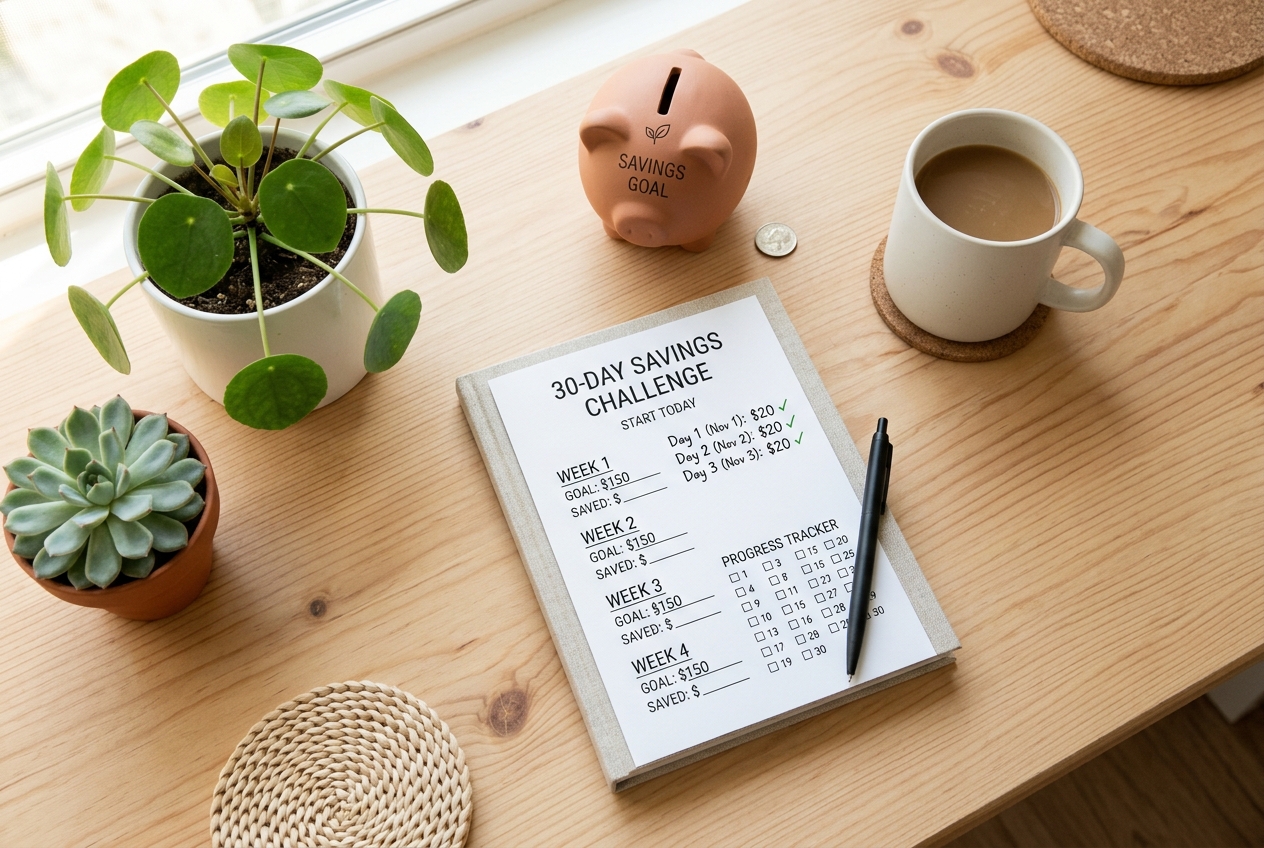
Step 4: The 30-Day "Cash Sprint" Method
If your budget is tight and trimming expenses alone won't get you to $1,000 fast enough, you need a temporary cash sprint. A sprint is an intentional, short-term push where you generate quick cash that goes 100% toward your $1,000 fund:
1. The 10-Item Clutter Purge
Walk through your home with a laundry basket. Pick 10 items you haven't used in the past six months (old electronics, designer jackets, musical equipment, sports gear, video games). List them on Facebook Marketplace or eBay at realistic prices. Most people generate $200 to $500 in one weekend from unused household items.
2. The Grocery Pantry Challenge
Before spending another $150 on your weekly supermarket haul, spend one week eating meals crafted exclusively from the dry goods, frozen vegetables, canned beans, and pasta already hiding in your cupboards and freezer. A single pantry week can keep $100 to $180 in your pocket.
3. Shift "Found Money" Directly to Savings
Any tax return, cash birthday gift, credit card reward cashback, or overtime bonus should be deposited directly into your emergency account before you see it in checking.
Step 5: What Counts as an Emergency?
Once you hit that $1,000 milestone, you must protect it. Establish clear criteria for when you are allowed to touch this money:
| ✅ Valid Emergency | ❌ NOT an Emergency | |---|---| | Urgent car repairs needed to get to work | A flash sale on winter coats | | Emergency prescription or doctor visit | A friend's last-minute birthday weekend trip | | Essential appliance replacement (fridge, oven) | Upgrading your phone because the new model dropped | | Unforeseen job reduction or gap between paychecks | Buying holiday gifts you forgot to budget for |
What Comes Next?
Reaching $1,000 is a monumental mental milestone. It proves to yourself that you have the discipline, systems, and mindset to accumulate capital.
Once your $1,000 starter emergency fund is locked in, keep the momentum alive:
- Grab our free printable 30-Day Mindful Spending Tracker to keep your daily impulse spending in check.
- Begin expanding your emergency buffer toward 3 to 6 months of living expenses.
- Learn how to stoke your compound interest growth by checking out our guide on exploring the 50/30/20 rule.