What is a Low-Buy Year?
Unlike a 30-day "no-spend challenge" which is a temporary sprint, a Low-Buy Year is an intentional 12-month lifestyle recalibration.
You don't stop spending money entirely. Instead, you create strict, thoughtful boundaries around discretionary consumer categories (clothes, gadgets, home decor, beauty products, eating out) while continuing to invest in your health, relationships, and meaningful experiences.
When our family completed our first Low-Buy Year, we didn't just save over $12,000; we broke the unconscious habit of equating "a stressful day" with "buying a parcel online."
Here are the 10 practical guidelines that made our Low-Buy Year sustainable and genuinely joyful.
Rule 1: The "Replace Only" Principle for Wardrobe
You are not allowed to buy new clothing or shoes unless an existing, essential staple is worn beyond repair or stained beyond wearability. If your favorite white sneakers get holes in the soles, you may replace them with a quality, durable pair. You cannot buy a 6th winter coat or another pair of black jeans simply because they are on sale.
Rule 2: Complete the "One In, One Out" Habit
If an item does enter your living space, an equivalent item must leave through donation or selling. This rule creates immediate mental friction: "Am I willing to part with my favorite vintage jacket just to bring this new one home?" In 90% of cases, the answer is no.
Rule 3: The 30-Day Wishlist Quarantine
Any non-essential item costing more than $30 must be recorded on a written Wishlist with the current date. It must sit in quarantine for a mandatory 30 days. If the desire remains fierce after four weeks, you may evaluate purchasing it with budgeted funds. Over 75% of quarantined items lose their shine before Day 30 arrives.
Rule 4: Ban Single-Use Trendy Convenience
Avoid "single-use gadget syndrome." You do not need a specialized avocado slicer, an egg-bite maker, or an electric milk frother when a basic knife, skillet, and whisk do the job perfectly. Stick to versatile, multi-purpose tools.
Rule 5: Utilize the Local Public Library
Before purchasing any physical book, digital Kindle edition, or audiobook on Audible, check your public library. Apps like Libby and Hoopla connect to your free library card and provide instant access to thousands of bestsellers, audiobooks, magazines, and documentaries.
Rule 6: The "Freezer & Pantry First" Sunday Audit
Before every weekly grocery trip, spend 15 minutes planning dinners around ingredients already sitting in your freezer and cupboard. This single habit slashes food waste and keeps food bills 25% lower month after month. (See our 15 Practical Grocery Hacks for more details).
Rule 7: Free Social Gatherings
Socializing is essential for mental health, but going to cocktail bars and upscale bistros every weekend quickly drains hundreds of dollars. Proactively suggest free or budget-friendly alternatives to friends:
- Sunday morning trail walk or park hike with thermos coffee.
- Backyard potluck dinners where each guest brings one dish.
- Board game or trivia nights at home.
Rule 8: Unsubscribe from Marketing Emails & Delete Shopping Apps
Marketing emails are engineered temptation delivered straight to your notification tray. Spend 30 minutes unsubscribing from fast-fashion retailers, flash-deal sites, and discount newsletters. Delete shopping apps from your phone so purchasing requires opening a desktop browser.
Rule 9: Track Your Mindful Progress Visually
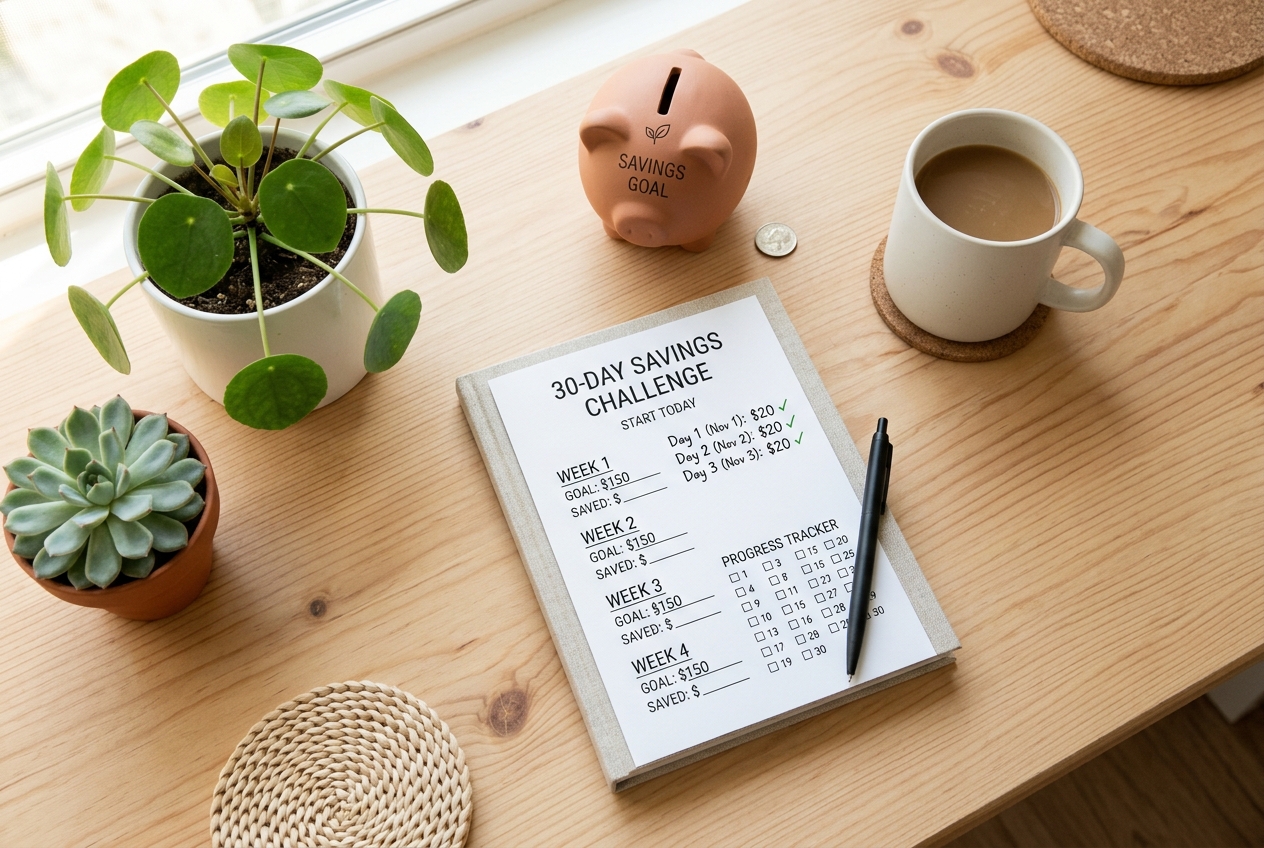
Habits stick when they are visually reinforced. Download our free printable 30-Day Mindful Spending Tracker or launch our interactive 30-Day No-Spend Challenge Tracker to mark off your mindful days.
Rule 10: Celebrate Non-Material Milestones
When you reach a major milestone (e.g. 6 months completed or an extra $5,000 stashed in your emergency fund), celebrate without shopping. Treat yourself to a relaxing spa bath, a scenic beach picnic, a long phone call with an old friend, or a homemade feast.
The Real Reward: Mental Space
The greatest benefit of a Low-Buy Year is not merely the money sitting in your bank account—it is the mental bandwidth you reclaim.
When you stop constantly researching what to buy next, tracking packages, and sorting clutter, you suddenly have time to read, create, exercise, and genuinely be present with the people you love.